An Introduction to the Art of Walking
Walking workshop held for students of art history
Oslo University, Blindern Campus, 6 October 2025
As Rebecca Solnit writes in the introduction to her book Wanderlust, a History of Walking, walking is at once “the most obvious and the most obscure thing in the world.” Homo sapiens are the only species of mammal that are habitually bipedal—that exclusively walk on two feet—yet this exceptional evolutionary trait is often overlooked and underappreciated, especially in the screen-saturated world we live in today. While walking in a practical sense is an effective means of moving from point A to point B, walking as a distinctive practice occupies a special place in the collective history and culture of our species, offering inspiration to countless writers, thinkers, philosophers, poets, artists, musicians, and architects throughout the ages. As Solnit writes, “Walking, ideally, is a state in which the mind, body, and the world are aligned, as though they were three characters finally in conversation together, three notes suddenly making a chord.”
Walking is a creative, generative, and artistic practice, allowing us to enter, perceive, and explore the world around us, in all its depth, complexity, and contradiction. To walk is to be grounded, partial and subjective—to be open to the unexpected and the unintended. It’s a practice which cultivates a form of spatial intimacy—a way of being-in-the-world—engaging the body as a sensory recording device to read and transcribe one’s surroundings. Walking is a mode of practice that offers the possibility of engaging with the world as it already is, providing a vantage point from which we can begin to rethink and reimagine the spaces, places, and landscapes that already surround us, or as Solnit reminds us, “The random, the unscreened, allows you to find what you don’t know you are looking for, and you don’t know a place until it surprises you.”
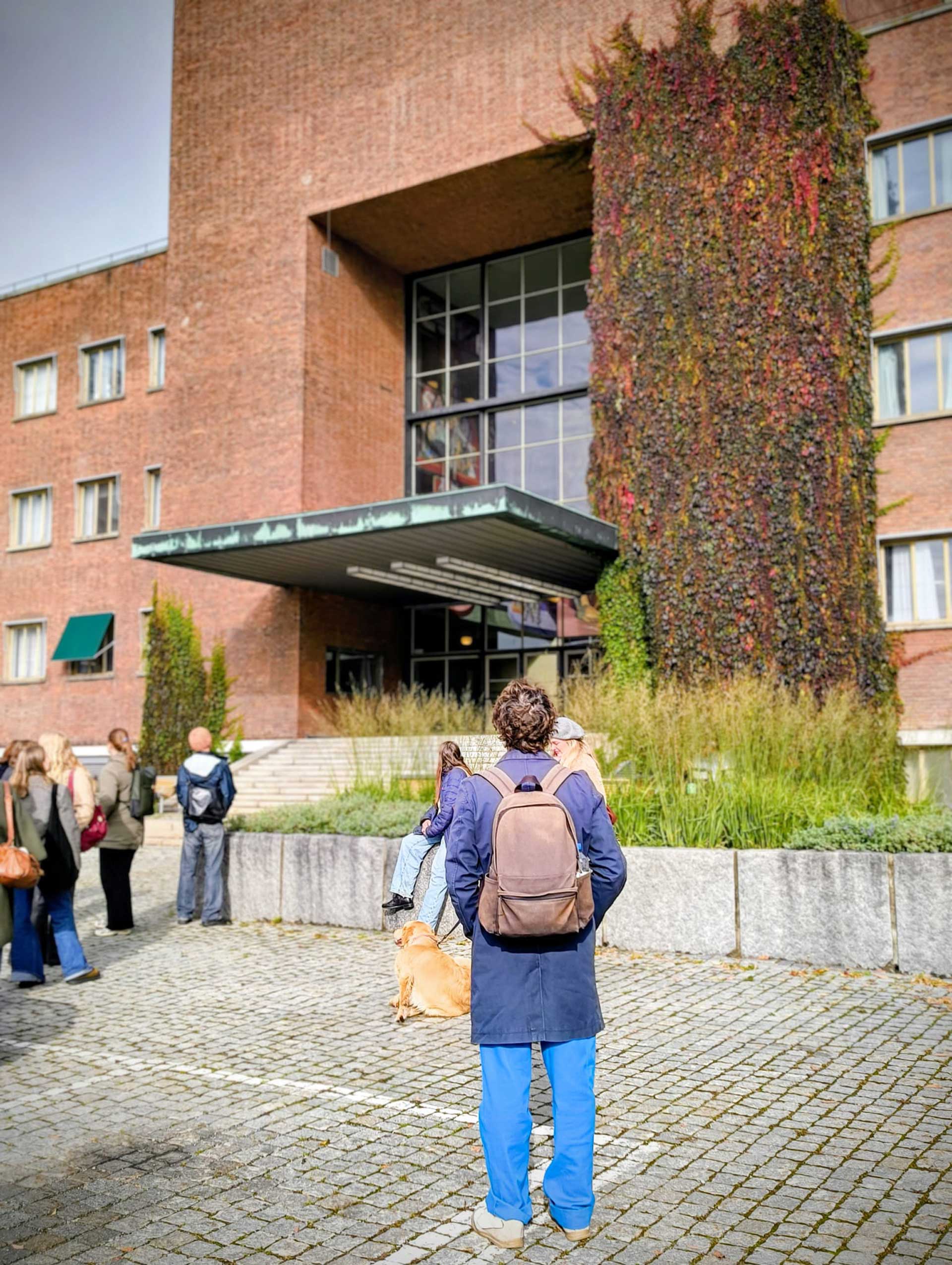
Today’s walking workshop will be grounded in this “unscreened” experience, which has an even more complex and deeper meaning today than when Solnit wrote Wanderlust back in the year 2000. We will move out of the classroom, and away from our multiple digital interfaces, and explore the art of walking in the wild, discovering on foot the campus of Oslo University in Blindern, and it’s immediate urban surroundings.
The workshop will take the form of three distinct walking exercises, each grounded in different historical and contemporary walking practices, all related to art, architecture, and the city. The aim is to see what already surrounds us, but with new eyes. To see things from a different perspective, and engage with our bodies and our senses in a way that heightens our perception and awareness of the word around us.
Walk 1: The Urban Readymade
Read: Rebecca Solnit, Wanderlust: A History of Walking (London: Penguin, 2001).
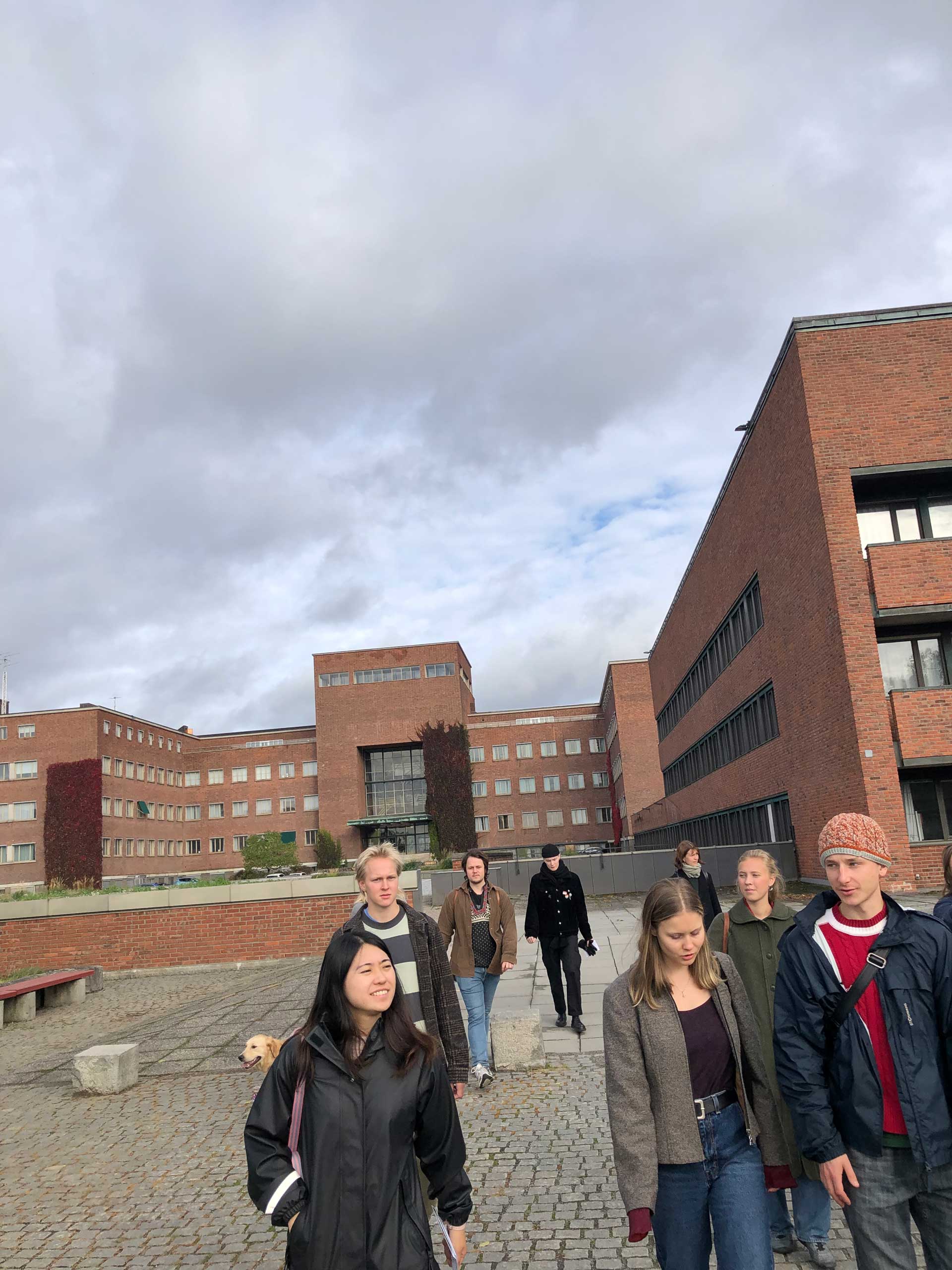
The first walk is a warm up to get our legs moving, and a way to start paying attention to the immediate urban surroundings of the campus—to begin to see what we habitually overlook. The “urban readymade” takes inspiration from the activities of the Dadaists and Surrealists of the early twentieth century. The Dada group, somewhat lead by Andre Breton, rejected logic, reason, and aesthetics, and were interested in nonsense, irrationality and anti-bourgous protest. On April 14, 1921 at three in the afternoon, in pouring rain, the Dada group completed their first Anti-walk, meeting in front of the church of Saint-Julien-le Pauvre—the first action to the banal places of the city. The action was backed up by press releases, proclamations, flyers and photographic documentation. The idea was to move art into the realm of the city itself—to use the urban fabric as the canvas. In a sense, the Dada raised the figure of the flâneur to an aesthetic operation, with Walter Benjamin later describing the walk as an art form that inscribes itself on real space and time, rather than another medium.
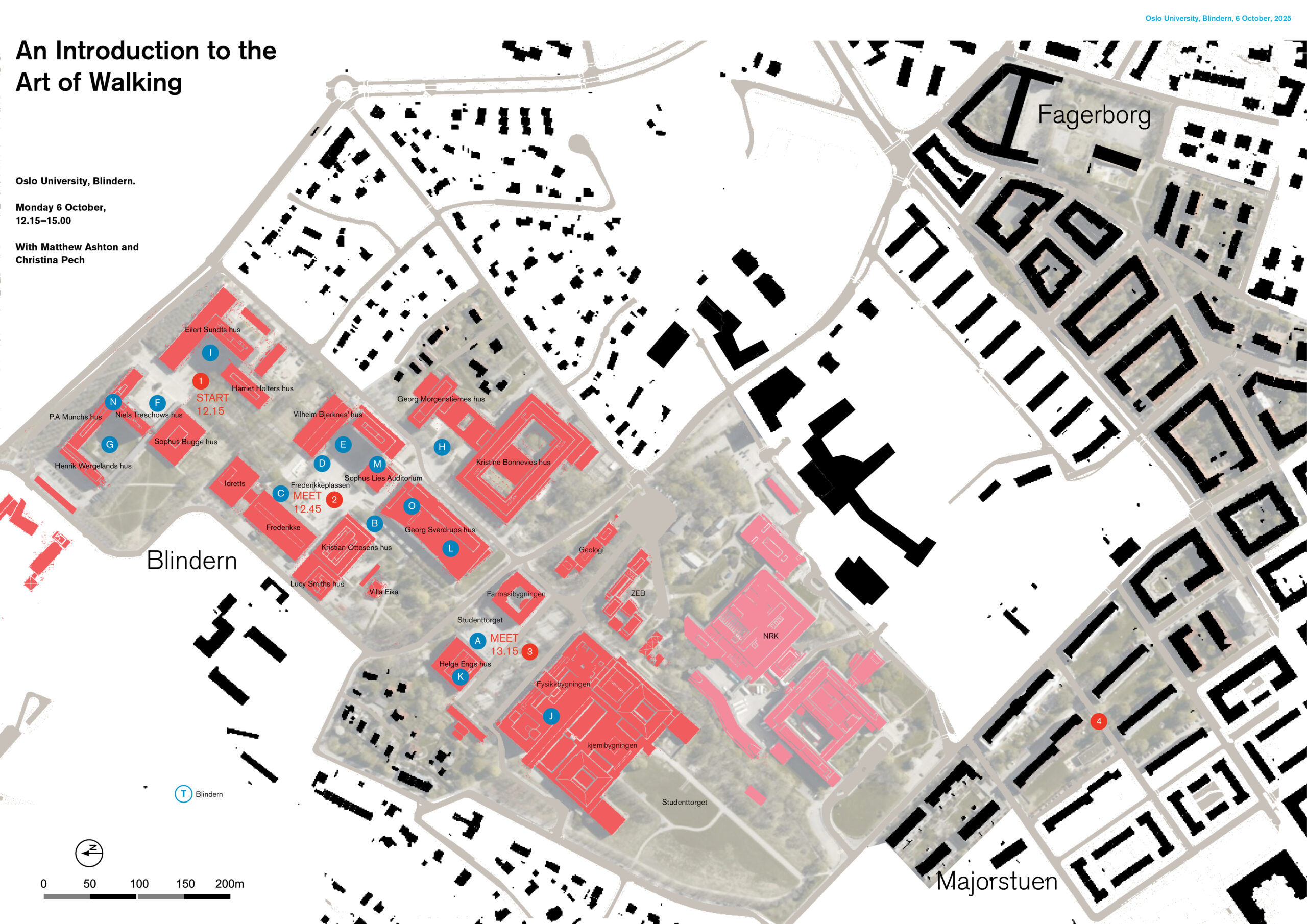
Split into four smaller groups and collectively negotiate a route around the campus, with a focus on the outside public spaces. Seek out interesting, boring, or otherwise peculiar and captivating places, sites, and objects. These can be works of public art, buildings and architectural details, landscape elements, or other bits of public infrastructure and amenities. What do you see, what do you find, and what draws your curiosity when you look at familiar surroundings with fresh eyes?
To help guide you, here is a list of some of the public artworks found on campus:
A: Jon Gundersen — Velle
B: Nina Sundbye — Hurry up, Grane, my steed
C: Arnold Haukeland — Air
D: Median Figure
E: Ingebrigt Vik — Nils Henrik Abel
F: Aase Texmon Rygh — Broken dorm
G: Dyre Vaa — Ivar Aasen
H: Stefanny Hillgaard — Play of thought
I: Ervin Løffler
Walk 2: The Society and the Spectacle
Read: Guy Debord, “Théorie de la dérive,” Internationale Situationniste #2 (1958) in Situationist International Anthology, ed. Ken Knabb, (Berkeley, CA: Bureau of Public Secrets, 2006.) 62–66
The second walk takes inspiration from the experimental walking pursuits of the Lettrist group—later reformed in 1957 as the Situationalist International—who had the ambition to use artistic practice to overthrow consumerist capitalist society. The concept of the ‘situations’ follows on somewhat from the walks of Dada and the surrealists, but with a more political agenda. Situations were acts which had the potential to undermine the existing power structures of society, or as SI put it, “A moment of life concretely and deliberately constructed by a collective organization of a unitary ambience and a game of events.” One primary method of experimental aesthetic practice for the Situationalists was the concept of the “dérive” (drift)—a collective act which aims to define the unconscious zones of the city and understand the psychic effects of the urban environment on the individual. The dérive aimed to construct new forms of behaviour in real life, to realise new ways of inhabiting the city, and challenge the rules of bourgeois society. In effect, the Situationalists rejected the separation between boring, alienating real life and marvellous imaginary life: Reality had to become marvellous.
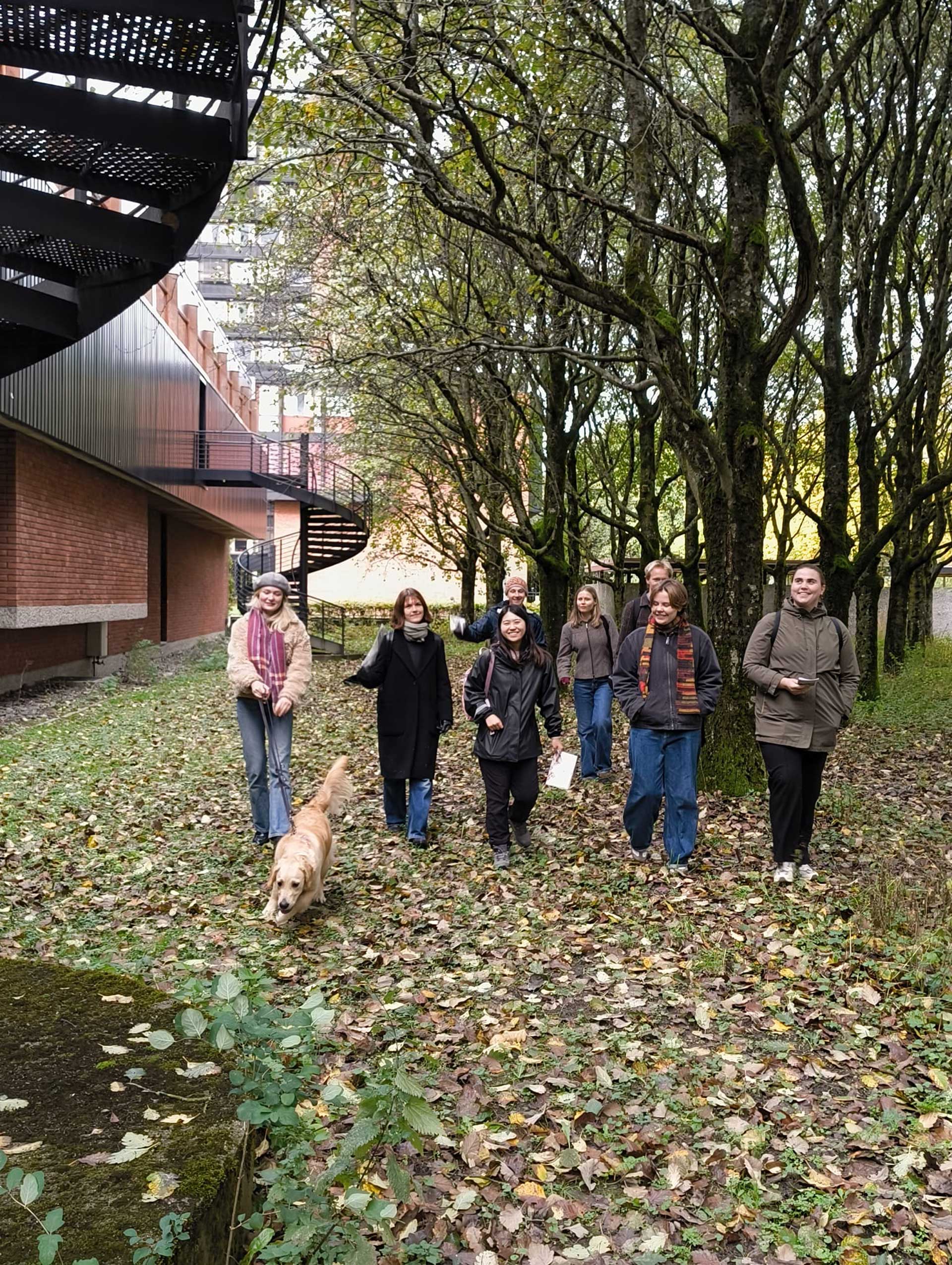
In the same groups as previously you will conduct a short dérive—or drift—through the campus, exploring both internal and external spaces. Try to find new, and unexpected passages through buildings and structures. explore internal passages that you may not be familiar with, and the internal public spaces of the university, such as the library and shopping area. Try to be aware of the psychic effects the movement though these spaces has on your body and senses. What unconscious desires draw you to certain spaces? Try to experience these spaces with an altered and augmented perspective—for this, try walking with the sky goggles, but please be careful and those without goggles should guide those with them.
For some inspiration, here is a list of internal public artwork on campus:
J: Per Krohg —The Atom in Space
K: Olav Christopher Jenssen — Lack of Memory II
L: Kjell Torriset — 836 Eyes
M: Naum Gabo — Constructed Head No. 2
N: Aase Texmon Rygh — Torso
O: Arne Ekeland — Before Departure
Walk 3: Going to Zonzo
Read: Mark Fisher, Introduction to Savage Messiah by Laura Oldfield Ford, (London ; New York: Verso, 2011) and, Lorenzo Romito, “Stalker Manifesto” (1996) published in, Francesco Careri, Walkscapes: Walking as an Aesthetic Practice (Barcelona: Editorial Gustavo Gili, 2002).
The final walk of the day takes inspiration from more contemporary urban walkers, such as the Roman walking collective Stalker, as well as the British artist Laura Grace Ford. Stalker began exploring the urban territory of Rome, especially the areas of abandonment in the city and along the river Tiber, using various artistic actions, interventions, and performances. In 1995 the collective conducted the walk Giro di Roma as a four-day trek circumnavigating the city, yet avoiding the built urban fabric, instead exploring the multiple gaps, in-between spaces, and urban wastelands that also constituted the city—spaces Stalker would later define as “actual territories.” Walking, for Stalker, becomes a way of exploring and engaging with the actual territories of the city as they exist, free from preconceptions and prejudices that one may carry, especially those cultivated through a background in architecture and planning. Walking becomes a method and a tool to bear witness to the world, to read the multiple entanglements and contradictions that constitute urban space, especially concerning the wild, the unplanned, and the unanticipated. Similarly, Laura Grace Ford, through her artistic practice, uses walking as a method to explore and document a city in a violent state of transformation (and displacement) through political-economic regimes of enclosure, privatisation, and gentrification. While Stalker’s walks are always collective events, Ford’s wanderings are much more personal, intimate, and introspective—a spatial poetics of the transient and ephemeral nature of the city.
For this final walk we will gather as one large group and walk collectively from the south end of the campus down towards the city, passing through the neighbourhood of Majorstuen, and onwards towards Fagerborg (depending on time). There is no fixed route, but we will decide organically which path we take, following some unconscious pull of the city. We can read the city as a palimpsest of different layers, as various urban ideals, architectural styles, and social-economic realities are juxtaposed atop another. Following on from Stalker and Ford, we should also pay attention to urban borders and boundaries, and the differentiation between public, private, and ambiguous spaces. Do we need to follow the designated paths, or can we transgress them?